Dear Family, Friends, and Partners of CTNNB1 Connect & Cure,
Because today is Thanksgiving, we find ourselves reflecting on the incredible community that surrounds and strengthens our mission. This season is a reminder of how much we have to be grateful for—and at the very top of that list is you.
To our donors, families, researchers, clinicians, advocates, and volunteers: thank you for giving your time, your energy, your generosity, and your hearts. Your support is the driving force behind every step forward, every discovery, and every moment of hope.
 2025 CTNNB1 Conference: A Huge Success!
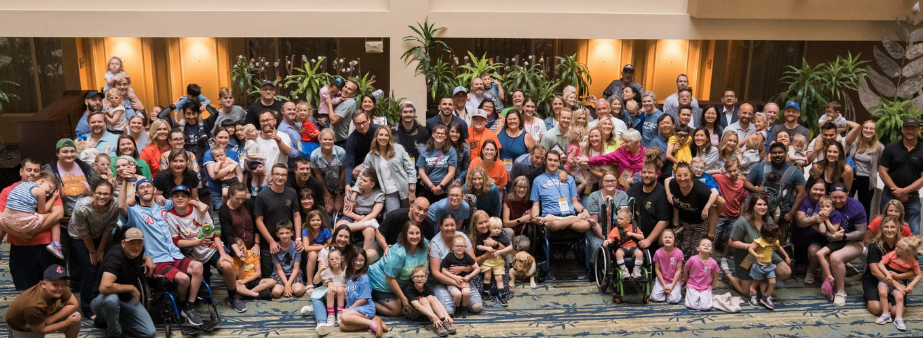
This year’s conference brought together over 293 participants from around the world—families, researchers, clinicians, and advocates—for a weekend filled with science, community, and connection. We are so thankful to everyone who took part in making this gathering meaningful and impactful.
We also hosted our 3rd in-person data collection event, where CTNNB1 families participated in natural history studies, EEGs, speech assessments, and biospecimen collection. This work is essential to understanding CTNNB1 syndrome and preparing the groundwork for future clinical trials.
To our event sponsors and contributors: your support made this conference not only possible, but unforgettable. Thank you!
 Rewatch the presentations and view the conference Photo Gallery: 2025 Conference
 Donor Spotlight
We’re honored to share that CTNNB1 Connect & Cure recently received a generous $50,000 contribution, made possible through the support of a dedicated donor and a corporate matching program.
This incredible gift strengthens our ability to accelerate important CTNNB1 research efforts—including ongoing work in small molecule development—and brings us closer to future clinical trial readiness.
To everyone who contributed to making this gift possible: thank you for your belief in this mission and your commitment to improving the lives of CTNNB1 families around the world.
 Fundraising Updates
Thanks to YOU, total fundraising for 2025 has now surpassed over $320,000—and we’re just getting started. We are incredibly grateful for every grassroots effort, t-shirt sale, donor drive, and family-led fundraiser. Your commitment continues to strengthen and sustain this mission.
 CTNNB1 Syndrome Has Its Own ICD-10 Code:
Q87.88
We are thrilled to share that CTNNB1 Syndrome now has a dedicated ICD-10 diagnostic code (Q87.88) —a major step toward improved medical recognition, better data tracking, and greater support services.
This milestone was made possible by the collective advocacy of our community. Thank you for your persistence and passion.
 Visiting the Lab: Families & Researchers Unite
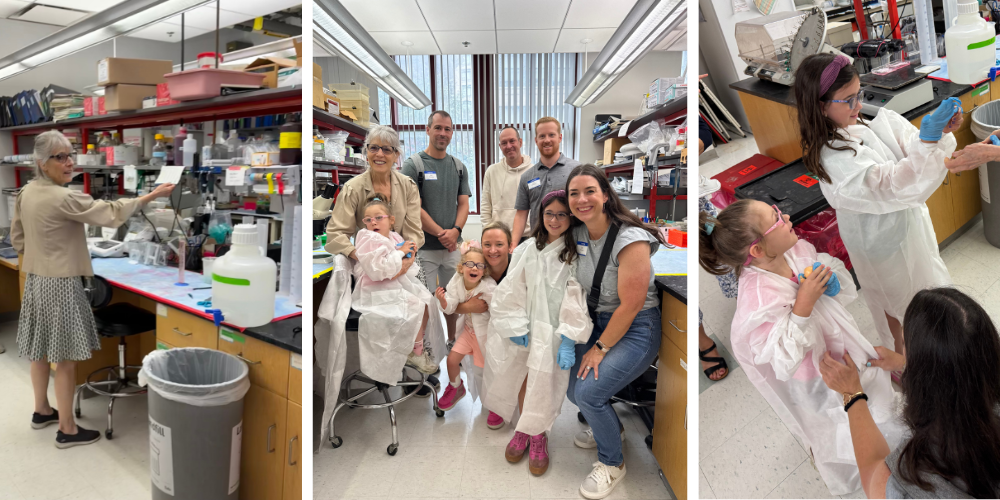
During the conference weekend, several board members visited Dr. Michele Jacob’s lab at Tufts University. Witnessing the research in action underscored something powerful: science moves forward because of people—families, researchers, and donors working hand in hand.
We are grateful to everyone who plays a part in fueling this momentum.
Research Updates: Moving Science Forward for CTNNB1 Syndrome
 Incredible strides are being made toward a small-molecule therapeutic treatment for CTNNB1 Syndrome.
Dr. Michele Jacob and her team have achieved an important breakthrough — they’ve successfully shown the small molecule drug treatment increases the reduced beta-catenin levels in a CTNNB1 mouse model and in brain neurons derived from stem cells of several CTNNB1 individuals with different CTNNB1 mutations.
Watch Dr. Jacob’s conference talk Drug Repurposing
We’re collaborating with Clement Chow, PhD (University of Utah), who has recently screened over 1,600 FDA-approved drugs using a fruit fly model of CTNNB1 syndrome. Several promising candidates have already emerged, and next steps include validating these drugs and exploring potential testing in patients. Watch Dr. Chow’s conference talk
💉 mRNA Therapy
Jeff Coller, PhD (Johns Hopkins University) is developing mRNA “boosters” to stabilize CTNNB1 mRNA and increase CTNNB1 protein levels in cells. This exciting approach could help reverse symptoms in patients with too-low CTNNB1 protein, with future studies planned in animal models.
📖 Read more about Dr. Coller’s work
🦠 Gut Microbiome Research
Mohammad Moshahid Khan, PhD (University of Tennessee) is studying the gut microbiome in CTNNB1 patients using donated stool samples. His work may identify non-invasive biomarkers and therapies to address gut-related issues in CTNNB1 syndrome. Watch Dr. Khan’s conference talk
👤 Disease Concept Study
We know that when patients are in the center of the process, clinical trials are more likely to succeed. Clinical data and published literature often miss important aspects of rare diseases. Using FDA published guidances, disease concept studies use a literature review, qualitative interviews, and quantitative analysis to paint the full picture of the disease. We are excited to be over halfway through the disease concept model process with the publication coming in 2026! Thank you to all of the CTNNB1 parents who participated in interviews for this important study.
A Thanksgiving Message of Gratitude
Because today is Thanksgiving, we want to say this clearly:
We are thankful for you—today, tomorrow, and every day after.
Your generosity, your advocacy, and your belief in a brighter future for our children are the reason we continue to push forward. As you gather with loved ones tomorrow, please know that your support is transforming lives and bringing hope to families around the world.
 Donate Here
With gratitude and hope,
The CTNNB1 Connect & Cure Team