
Dear Family, Friends, and Partners of CTNNB1 Connect & Cure,
As we step into the fourth quarter, we want to take a moment to update you on our progress, share some exciting news, and express our heartfelt gratitude for your unwavering support in our mission to find treatments and a cure for CTNNB1 syndrome.
CTNNB1 SMALL MOLECULE DRUG DEVELOPMENT RECEIVES SUPPORT FROM U.S. FEDERAL GOVERNMENT
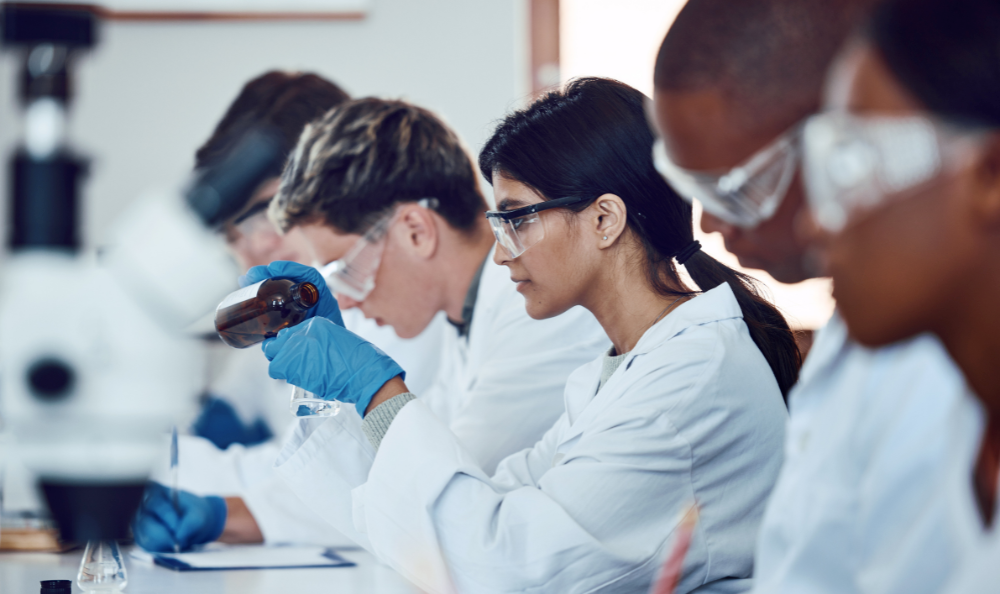
We are elated to announce that a lead compound for corrective outcomes has been selected by the National Center for Advancing Translational Sciences (NCATS), National Institutes of Health (NIH) for optimization.
The goal is to develop a drug candidate in preparation for human clinical trials. Entrance into the Therapeutics for Rare and Neglected Diseases (TRND) program at NCATS Division of Preclinical Innovation (DPI), Therapeutic Development Branch (TDB) was made possible thanks to the tiring work of our primary investigator, Michele Jacob at Tufts University in collaboration with her partners at The Broad Institute of MIT and Harvard. The process of being chosen for this competitive NCATS collaboration was over a year in the making and all your support helped us get to this critical point.
During this next year of the collaboration with Tufts University and the Center for the Development of Therapeutics (CDoT) at the Broad Institute, the NIH NCATS TDB will invest their federal resources to develop efficacious and safe drug candidates for CTNNB1 syndrome. Their researchers, in collaboration with ours, will work on the properties of potency, metabolic stability and blood-brain barrier permeability, and test the optimized drug candidate in patient-derived cell and in vivo mouse models.
These are the critical foundational studies required for Investigational New Drug (IND) enabling studies and design of a human clinical trial for our CTNNB1 patients. We will keep everyone updated on all major milestones. If you would like to help with the amazing work that we are doing to cure CTNNB1 please consider donating at https://www.curectnnb1.org/get-involved/donate/.
Two New CTNNB1 Publications
Vitreoretinopathy in Asymptomatic Children With CTNNB1 Syndrome: The results from this study suggest that doctors should consider using a special eye exam, called ultra-widefield fluorescein angiography, for people with CTNNB1 syndrome. This publication is an important resource for families to bring to their ophthalmologist!
Inhibition of GSK3α,β rescues cognitive phenotypes in a preclinical mouse model of CTNNB1 syndrome: This study identifies a highly selective inhibitor of glycogen synthase kinase (GSK)3α,β that significantly improves symptoms, bringing them closer to the levels seen in healthy individuals. The findings offer new insights into molecular and functional changes in the brain and present the first evidence of a promising treatment with potential benefits for individuals with CTNNB1 syndrome. These results were foundational to receiving the NIH partnership described in the section above.
Fundraising Progress
So far in 2024, we have raised over $263,000!
Recap of CTNNB1 Day
We are incredibly grateful for your support in helping us raise funds for CTNNB1 Day on July 25th. Thanks to your generosity, we raised an impressive $15,620.58 throughout the month of July. This achievement wouldn’t have been possible without your continued commitment, and we deeply appreciate your dedication to our cause.
December 3rd is Giving Tuesday!
Join Us This Giving Tuesday and help us bring hope to the CTNNB1 Community by continuing to support our research efforts! Choose between a one-time, monthly, quarterly or yearly donation. Whatever the amount, we appreciate your support and wouldn’t be able to continue to fight for hope without your generosity.
Donate Here
Awards & Recognition
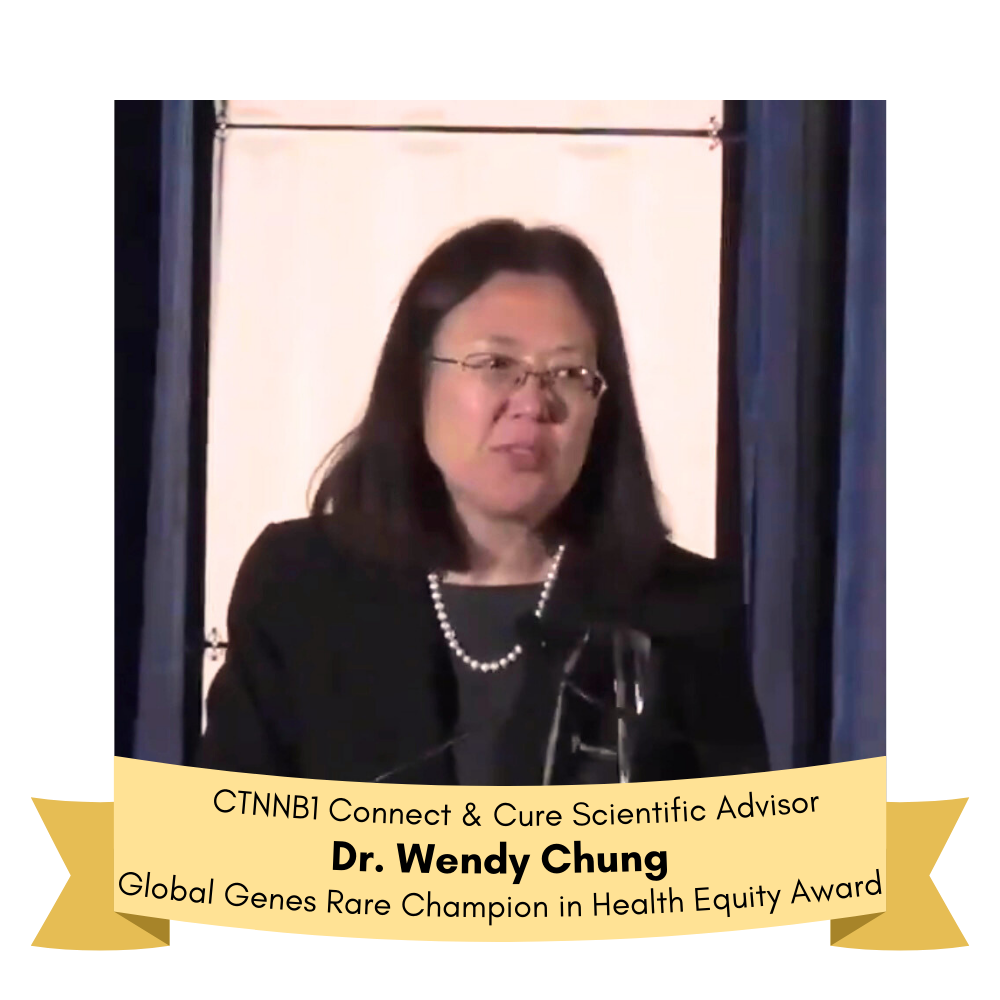
At this year’s Global Genes Champions of Hope Ceremony, Dr. Chung received the Rare Champion in Health Equity Award. Dr. Chung’s decades of dedication to advancing research, care, and support for those affected by rare genetic neurodevelopmental disorders have made a significant impact. Her work as a committed advocate for underrepresented communities has shaped more inclusive healthcare systems. She also leads the GUARDIAN study, which focused on advancing health equity and early diagnosis for rare genetic diseases. We are so lucky to have her helping pave the way for CTNNB1 patients! Click here to read more about this prestigious award.
Also during the Champions of Hope Ceremony, we had two well-deserving nominees for the Rare Champion in Advocacy Award:
Effie Parks, CTNNB1 Connect and Cure Director of Partnerships
Rachel Heilmann, CTNNB1 Connect and Cure Science Advisory Board member
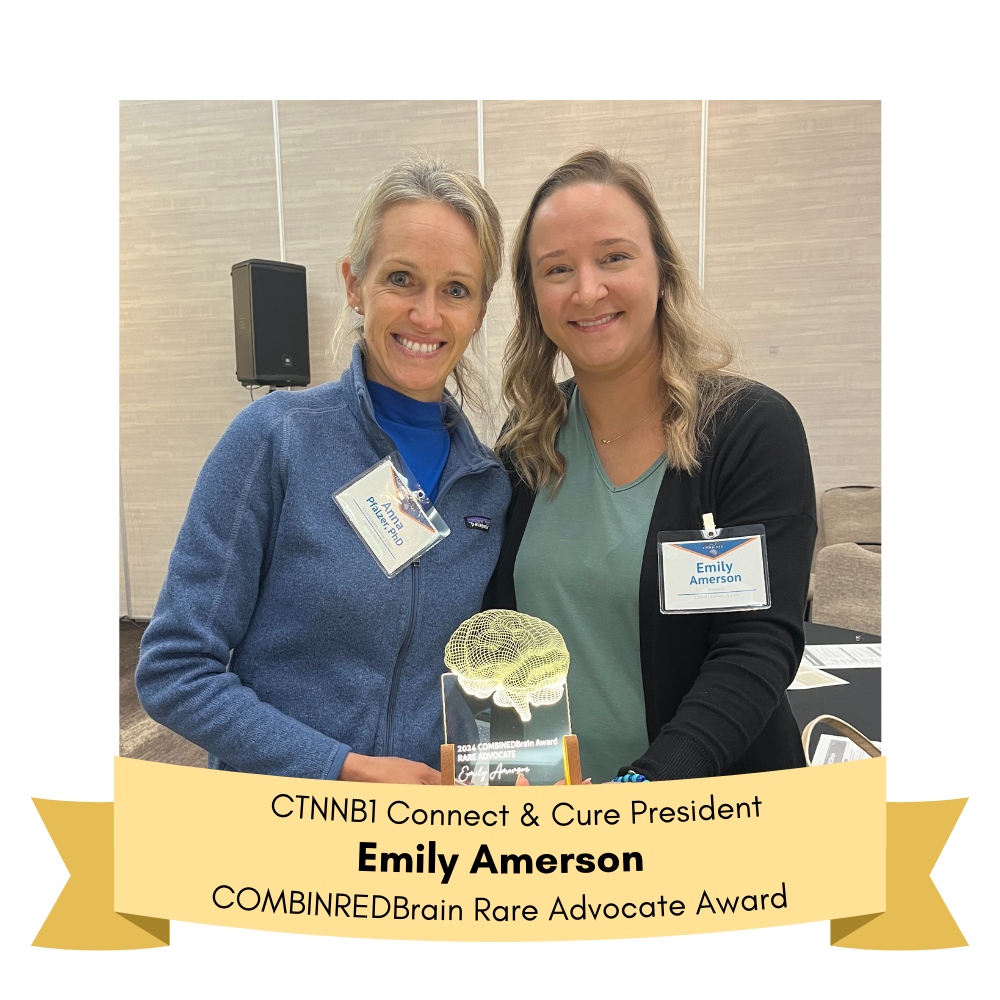
Out of hundreds of rare advocates, Emily was chosen for this year’s Rare Advocate Award at the Annual COMBINEDBrain Meeting for her relentless drive. She is a valued participant in regular COMBINEDBrain meetings and is the brains behind their new pediatric cerebrospinal fluid and CNS tissue repository which is available to RARE researchers worldwide. Emily’s impact on the CTNNB1 community as well as the larger rare disease community has been nothing short of incredible.
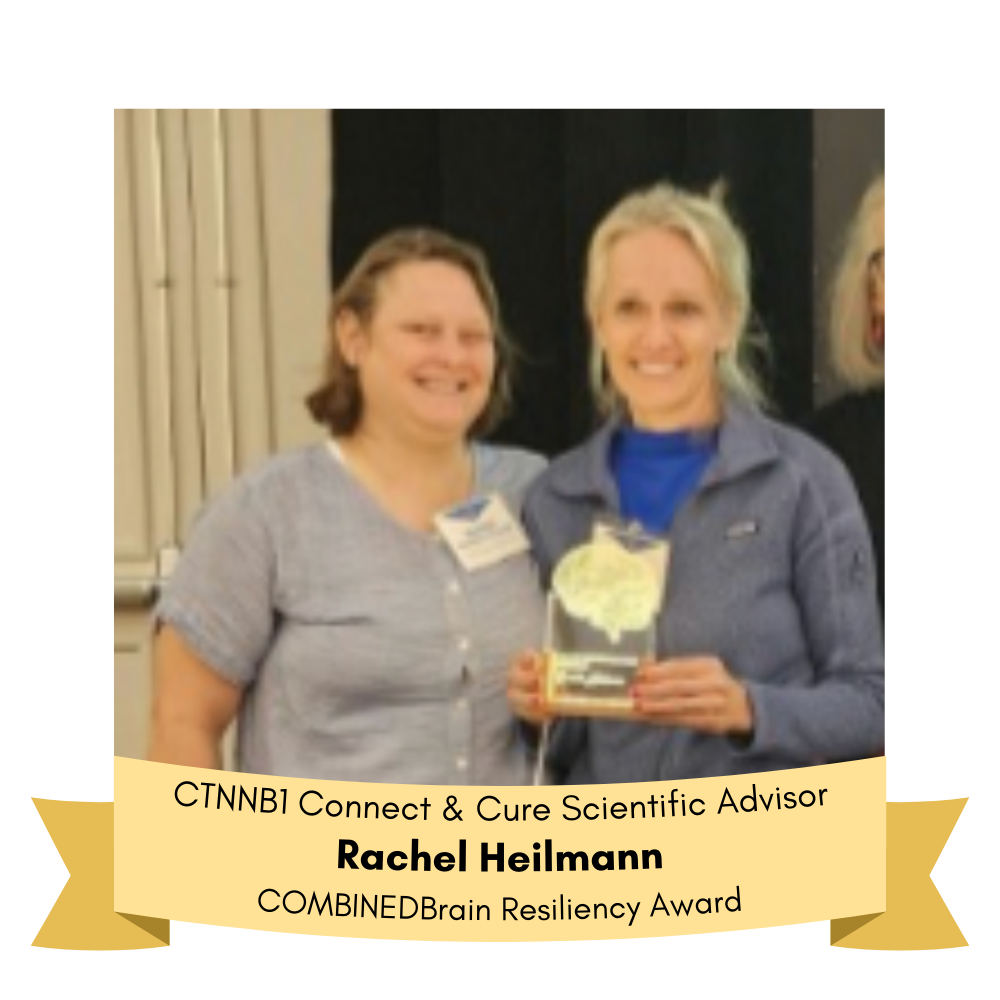
New to our CTNNB1 Connect & Cure Science Advisory Board, but not new to the rare disease space, Rachel Heilmann received COMBINEDBrain’s Resiliency Award. As the name implies, this award recognizes Rachel’s earnest resilience in the face of unthinkable circumstances. She lost her daughter, Rory, to NARS1 disease and honors her legacy to the highest extent by pushing the entire rare disease field forward in many different ways.
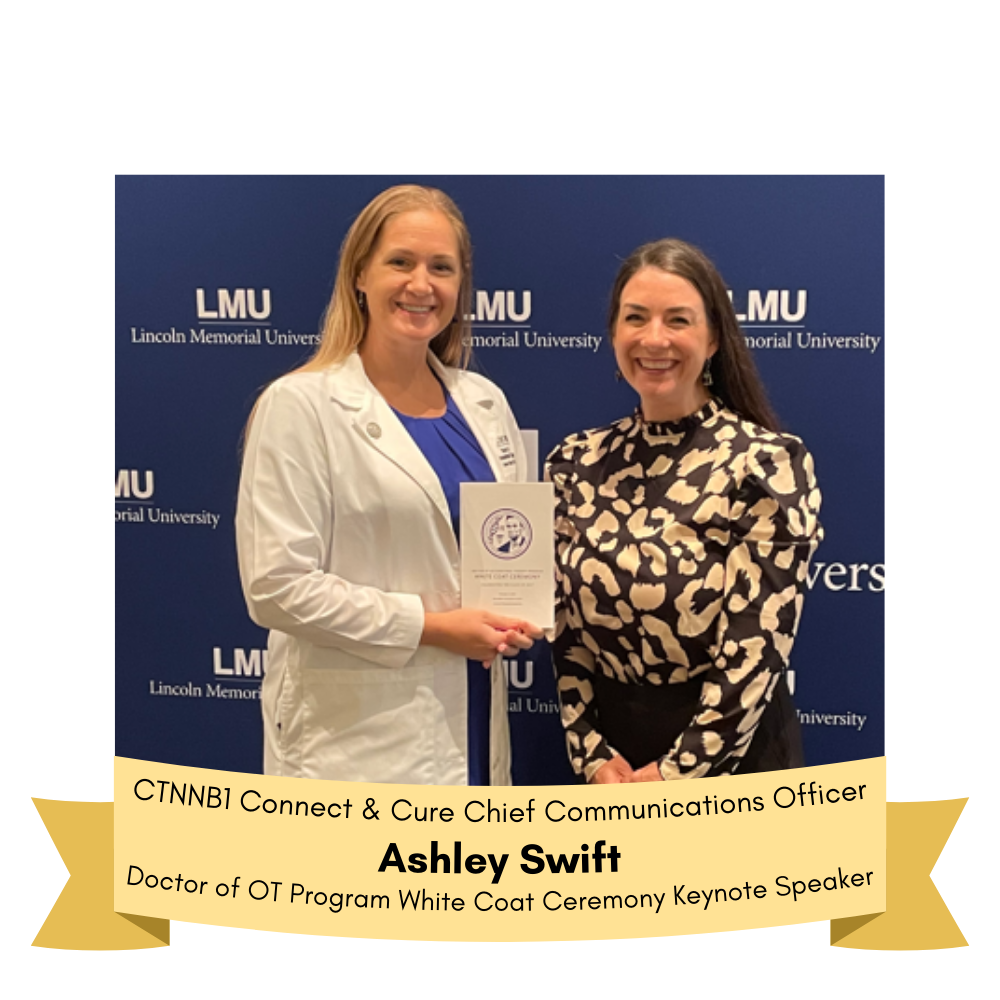
This event signifies when students transition from student to clinician. Ashley spoke on her daughter Evelyn’s journey to get the CTNNB1 diagnosis, the importance of genetic testing to receive the best patient care, and how occupational therapy has helped her daughter. She focused her speech on ensuring that the occupational therapists understood how much purpose their role is in providing the essential therapy in giving her daughter the ability to be able to experience life outside the home and create lasting memories with the entire family.
Genetic Diagnosis Matters
We are continuing to work hard to ensure CTNNB1 patients are properly diagnosed to ensure they are receiving the proper care. Our U.S. CTNNB1 Natural History Registry consists of 259 registered families. We have approximately 450 known diagnosed CTNNB1 patients worldwide and that number is expected to continue to increase with the increase prevalence of genetic testing.
It’s estimated that 243,797 people are actually living with CTNNB1 Syndrome worldwide. Since 25% of Cerebral Palsy is caused by genetics, we have partnered with the company Probably Genetic to offer free genetic testing to those who qualify. If you know anyone who has cerebral palsy without a known cause, feel free to share our link with them to see if they qualify to find out if they have a genetic cause: Free Genetic Testing Link
Your Impact
We couldn’t do anything without the support from our donors. Your donations have allowed us to make significant strides towards treatments for those affected by CTNNB1 Syndrome. From the bottom of the hearts of every single family affected by this disease, thank you!!!
Please consider making a monthly donation to keep our progress in motion. On our new giving page, you can make your gift in honor of someone special and you can even select a preferred area for the funds to be used!
Stay in the Loop
Thank you for taking the time to read this newsletter! Make sure you are following us on social media for more updates, dragonfly spotlights, and more!