


What is Tethered Spinal Cord?
A tethered spinal cord (also called Tethered Spinal Cord Syndrome) is a neurological condition in which the spinal cord becomes abnormally attached to surrounding tissue. This limits the spinal cord’s normal movement and can place tension on the nerves as a child grows.
Why It Matters for CTNNB1 Syndrome
Children with CTNNB1 Syndrome may already experience:
- Hypotonia (low muscle tone)
- Spasticity
- Gait differences
- Scoliosis
- Delayed motor development
Because many symptoms of tethered cord overlap with common CTNNB1 features, tethered spinal cord can sometimes be difficult to recognize. In some cases, new or worsening neurological symptoms may warrant further evaluation by a neurologist or neurosurgeon familiar with tethered cord syndrome.
Possible Signs & Symptoms
Symptoms can vary widely and may range from mild to severe. Some children may have several symptoms, while others have very few.
Neurological & Mobility Symptoms
- Changes in walking or gait
- Toe walking
- Leg weakness
- Increased muscle tightness or spasticity
- Back or leg pain
- Balance or coordination changes
- Fatigue with walking
- Regression in mobility skills
Orthopedic Symptoms
- Scoliosis
- Foot deformities or changing foot posture
- Tight heel cords
- Uneven leg use
Bladder & Bowel Symptoms
- Urinary accidents or urgency
- Difficulty emptying the bladder
- Frequent urinary tract infections
- Chronic constipation
- Loss of bowel or bladder control
Skin Findings
Some children may also have skin findings over the lower spine, including:
- Dimples
- Hairy patches
- Fatty lumps
- Skin discoloration
- Asymmetrical gluteal crease
Not all children with tethered cord have visible skin findings.
Diagnosis
Evaluation for tethered spinal cord often includes:
- Neurological examination
- Review of symptoms and developmental history
- MRI imaging of the spine
MRI is commonly used to look for signs that the spinal cord is positioned lower than expected or attached to surrounding tissues. Because CTNNB1 Syndrome is rare and complex, the imaging should be reviewed by a pediatric neurosurgeon.
Treatment
Treatment depends on symptoms, imaging findings, and clinical progression.
Monitoring
Some individuals may only require observation and regular follow-up if symptoms are mild or stable.
Surgery
In symptomatic cases, neurosurgical “detethering” surgery may be recommended to release tension on the spinal cord and help prevent worsening neurological damage.
Outcomes vary by individual, but earlier recognition and treatment are generally associated with better long-term neurological outcomes.
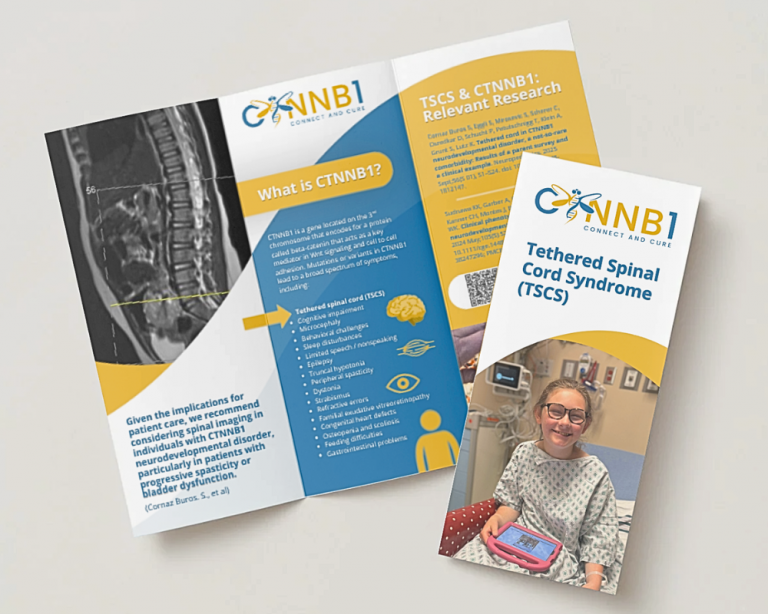
Relevant Research
Cornaz Buros S, Eggli S, Mirosevic S, Scherer C, Osredkar D, Schucht P, Petutschnigg T, Klein A, Grunt S, Lutz K. Tethered cord in CTNNB1 neurodevelopmental disorder, a not-so-rare comorbidity: Results of a parent survey and a clinical example. Neuropediatrics. 2025 Sept;56(S 01), S1–S24. doi: 10.1055/s-0045-1812147.
Sudnawa KK, Garber A, Cohen R, Calamia S, Kanner CH, Montes J, Bain JM, Fee RJ, Chung WK. Clinical phenotypic spectrum of CTNNB1 neurodevelopmental disorder. Clin Genet. 2024 May;105(5):523-532. doi: 10.1111/cge.14487. Epub 2024 Jan 21. PMID: 38247296; PMCID: PMC11872165.
CTNNB1 Connect & Cure. The Pediatric Neurosurgeon’s Role in Rare Disease Therapeutics (Presentation by Ramin Eskandari, MS, MD FAANS). 2025.
This page is intended for educational purposes only and should not replace medical advice from a qualified healthcare provider. If you suspect your child may have symptoms of tethered spinal cord, please consult your medical team.